
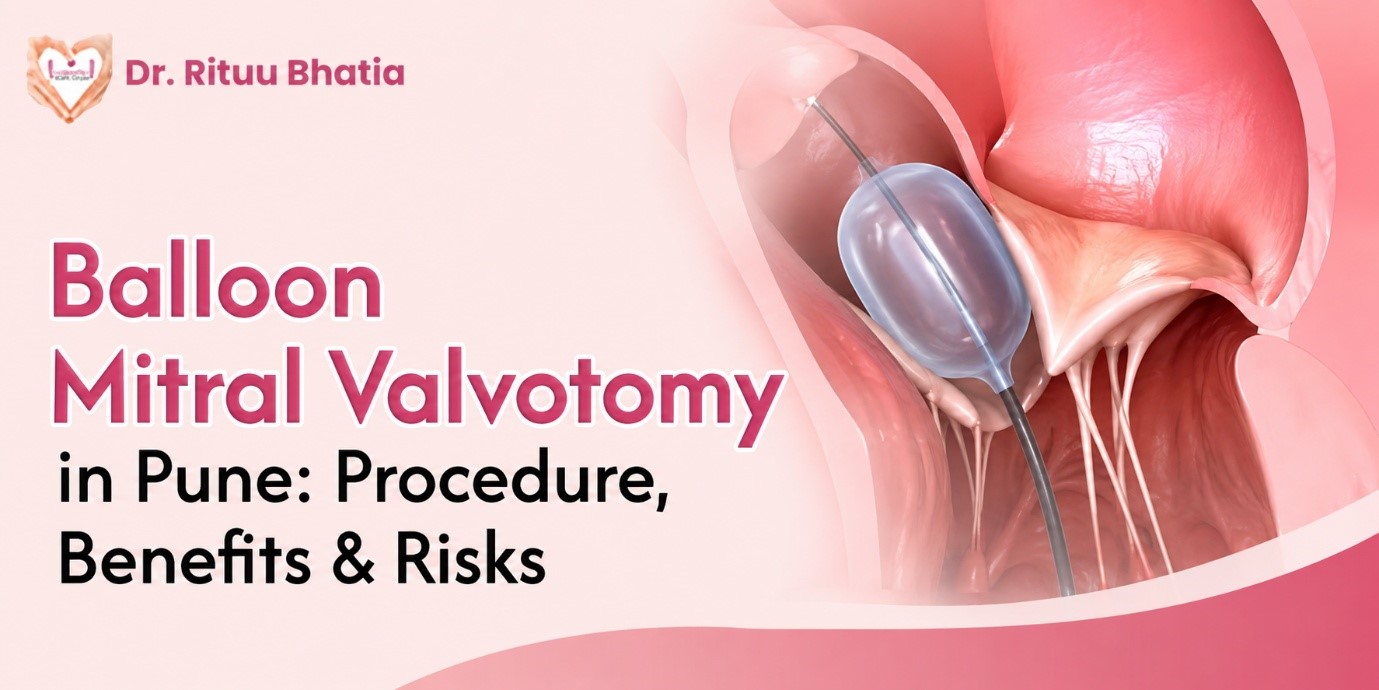
Balloon Mitral Valvotomy in Pune: Procedure, Benefits & Risks
Heart valve problems can affect how efficiently blood flows through the heart. One condition that may require specialized treatment is mitral valve stenosis, where the mitral valve becomes narrowed and restricts normal blood flow. Depending on the severity and individual health condition, a minimally invasive proceedure called balloon mitral valvotomy may be considered.
For people exploring Balloon Mitral Valvotomy in Pune, understanding how the procedure works, its potential benefits, risks, and recovery can make the treatment journey easier to understand. At Narindra Heart Clinic, patients can discuss their condition and available treatment options with an experienced cardiac specialist.
What Is Balloon Mitral Valvotomy?
Balloon mitral valvotomy, also known as balloon mitral valvuloplasty, is a catheter-based procedure used to open a narrowed mitral valve.
The procedure involves guiding a thin catheter with a small balloon through a blood vessel toward the heart. Once the balloon reaches the mitral valve, it is carefully inflated to help separate the valve's narrowed areas and improve blood flow.
Unlike open-heart surgery, the procedure does not require a large chest incision.
Why Is It Performed?
The procedure may be considered for selected patients with significant mitral valve stenosis, particularly when the valve structure is suitable for balloon treatment.
Common Symptoms of Mitral Valve Stenosis
Patients may experience:
- Breathlessness, especially during activity
- Fatigue
- Reduced exercise tolerance
- Palpitations
- Swelling in the legs or feet
- Chest discomfort in some cases
The severity and cause of the valve narrowing determine whether intervention is required.
How Does the Procedure Work?
Understanding the basic steps can help patients feel more prepared.
1. Pre-Procedure Evaluation
Before treatment, the cardiology team evaluates the patient's medical history, symptoms, heart function, and valve structure. Tests such as echocardiography and other investigations may be recommended.
2. Catheter Placement
A catheter is introduced through a blood vessel, commonly through the groin, and guided toward the heart.
3. Balloon Positioning
The balloon catheter is carefully positioned across the narrowed mitral valve.
4. Balloon Inflation
The balloon is briefly inflated to widen the valve opening. The aim is to improve blood flow through the heart.
5. Monitoring
The heart and valve are assessed after the procedure to determine the result and check for potential complications.
Potential Benefits
For appropriately selected patients, balloon mitral valvotomy may offer several advantages.
- Improved Blood Flow
Opening the narrowed valve can allow blood to move more freely through the heart. - Reduced Symptoms
Some patients may experience improvement in breathlessness and exercise tolerance following successful treatment. - Minimally Invasive Approach
Because the procedure is performed through a catheter, it generally avoids the large incision associated with traditional open-heart surgery. - Shorter Recovery
Recovery may be faster than recovery from major open-heart surgery, although the actual recovery period varies between individuals.
What Are the Risks?
Like any medical procedure, balloon mitral valvotomy has potential risks. These may include:
- Bleeding or bruising at the catheter entry site
- Abnormal heart rhythm
- Damage to the blood vessel
- Leakage of the mitral valve
- Blood clots or embolic complications
- Infection
- Rarely, serious cardiac complications
The individual risk depends on factors such as valve condition, age, overall health, and other medical conditions.
Who May Be a Candidate?
Not everyone with mitral stenosis is suitable for balloon treatment. The valve's structure and severity of narrowing are important considerations.
A specialist may evaluate:
- Mitral valve anatomy
- Degree of valve narrowing
- Presence of significant valve leakage
- Heart function
- Symptoms
- Other medical conditions
A detailed evaluation is essential before deciding on the procedure.
Recovery After the Procedure
Recovery recommendations vary depending on the patient's health and the procedure's outcome. Patients may be advised to rest for a short period and avoid strenuous activity for a specified time.
Follow-up appointments and echocardiography may be recommended to monitor valve function and overall heart health.
Patients should follow their cardiologist's medication and activity instructions carefully.
Why Choose Narindra Heart Clinic?
At Narindra Heart Clinic, we believe cardiac treatment should begin with a clear understanding of the patient's condition.
Our approach focuses on:
- Detailed cardiac evaluation
- Personalized treatment planning
- Clear explanation of treatment options
- Regular follow-up
- Preventive cardiac care
- Patient-focused communication
If you are considering treatment, consulting a best cardiologist in pune can help you understand whether a catheter-based valve procedure is appropriate for your condition.
Conclusion
Balloon mitral valvotomy can be an effective treatment option for selected patients with mitral valve stenosis. It is a minimally invasive procedure that aims to improve blood flow and reduce symptoms without requiring traditional open-heart surgery.
However, suitability and expected outcomes vary from person to person. A thorough cardiac and valve evaluation is necessary before choosing the procedure.
If you are considering Balloon Mitral Valvotomy in Pune, discuss your symptoms, test results, treatment options, benefits, and potential risks with a qualified cardiac specialist.
Frequently Asked Questions (FAQs)
It is a minimally invasive catheter-based procedure rather than traditional open-heart surgery. A balloon catheter is used to widen the narrowed mitral valve.
The duration can vary depending on the patient's anatomy, valve condition, and other factors. Your treating cardiac team can provide a more specific estimate.
The procedure is performed with appropriate anesthesia or sedation to maintain patient comfort. Some soreness or discomfort may occur around the catheter insertion site afterward.
Recovery varies between patients. Your cardiologist will provide personalized instructions regarding rest, work, exercise, and other activities.
No. The procedure is appropriate only for selected patients. Valve anatomy, severity of stenosis, valve leakage, heart function, and overall health are considered before treatment.