
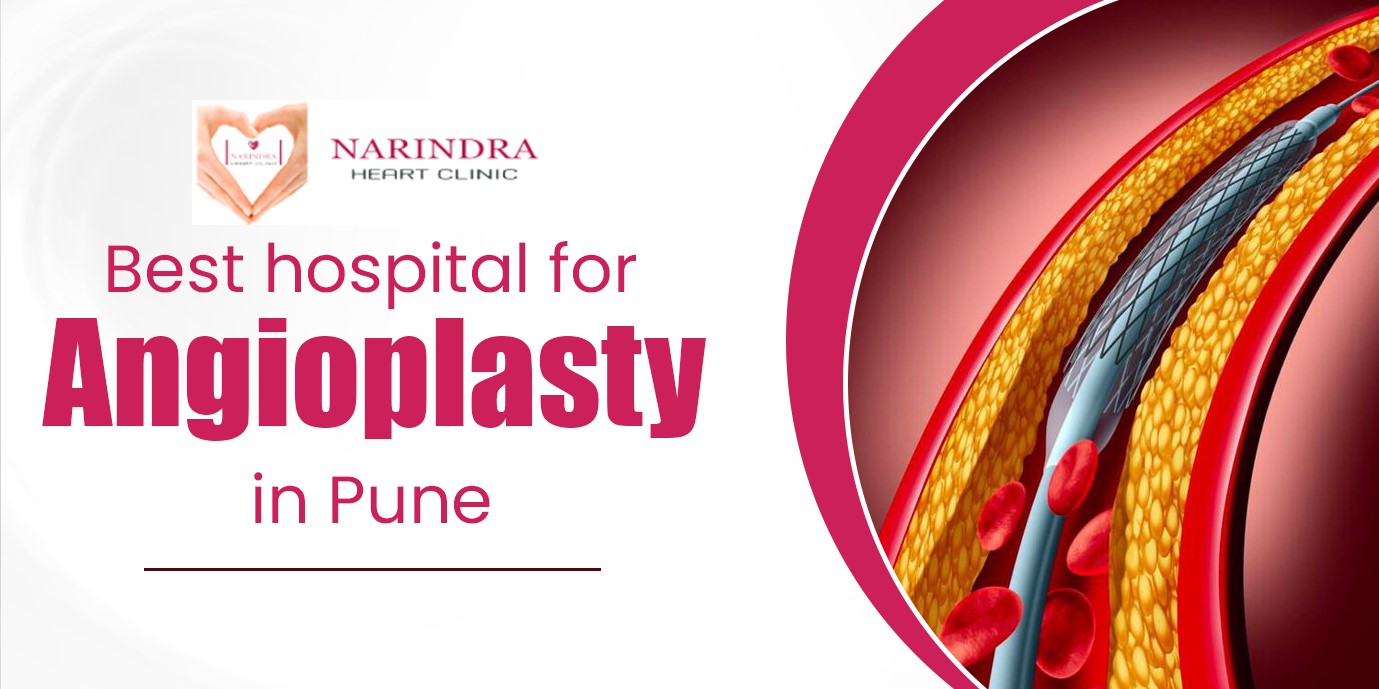
Best Hospital for Angioplasty in Pune
Heart health requires timely diagnosis, appropriate treatment, and guidance from experienced medical professionals. When a person has a narrowed or blocked coronary artery, angioplasty may be recommended to help restore blood flow to the heart. Choosing the right hospital is an important decision, especially when you are searching for Angioplasty in Pune and want access to reliable cardiac care.
At Narindra Heart Clinic, we believe that patients should understand their treatment options and receive personalized guidance based on their heart health, symptoms, and medical history. Knowing how angioplasty works and what to consider when selecting a hospital can help you prepare for your cardiac treatment journey.
What Is Angioplasty?
Angioplasty, also known as percutaneous coronary intervention (PCI), is a procedure used to improve blood flow through a narrowed or blocked coronary artery. A thin catheter is guided through a blood vessel toward the affected artery.
A small balloon may be inflated to help widen the narrowed area. In many cases, a stent is placed to help keep the artery open. The exact treatment approach depends on the patient's condition and the cardiologist's assessment.
When Is Angioplasty Recommended?
Understanding Coronary Artery Blockage
Coronary artery disease can cause narrowing in the blood vessels that supply blood to the heart. Depending on the severity of the blockage and the patient's symptoms, a cardiologist may recommend medication, lifestyle changes, angioplasty, bypass surgery, or another treatment.
Angioplasty may be considered in certain cases of significant coronary artery narrowing or during an emergency heart attack. The decision depends on several clinical factors and should be made by a qualified medical team.
What Is Stent Placement?
How Does an Angioplasty Stent Work?
A stent is a small mesh tube that is placed inside a narrowed coronary artery to help maintain blood flow. It is commonly used during angioplasty when the cardiologist determines that stent placement is appropriate.
Patients searching for Angioplasty Stent Placement Surgery in Pune should clarify their search requirements, as stent placement is a medical procedure rather than a manufacturing service. For treatment, patients should consult a qualified cardiac specialist and an appropriate medical facility.
The type of stent and treatment plan depend on the artery involved, the nature of the blockage, and the patient's overall health.
What Should You Look for in an Angioplasty Hospital?
-
Experienced Cardiac Specialists
The experience and qualifications of the cardiology team are important considerations. Ask about the specialist's experience with relevant procedures and how treatment decisions are made.
-
Cardiac Facilities and Emergency Support
A suitable hospital should have the facilities and medical support required for the planned procedure. If angioplasty is being considered during an emergency, rapid assessment and timely treatment are particularly important.
-
Pre-Procedure and Follow-Up Care
Good cardiac care includes more than the procedure itself. Patients should receive clear instructions about preparation, medications, recovery, follow-up appointments, and lifestyle changes.
Preparing for Angioplasty
Before the procedure, your medical team may review your medical history, medications, allergies, blood tests, and relevant cardiac investigations. Follow the instructions provided regarding food, fluids, and medicines.
After angioplasty, patients may need prescribed medications, including antiplatelet medicines, to reduce the risk of complications. Never stop or change prescribed medication without consulting your doctor.
Why Choose Narindra Heart Clinic?
At Narindra Heart Clinic, we focus on helping patients understand their heart health and available treatment options. Our approach emphasizes appropriate cardiac evaluation, specialist guidance, and individualized care planning.
If you are exploring Angioplasty in Pune, discussing your symptoms and test results with a qualified cardiologist can help you understand whether angioplasty is suitable for your condition.
Recovery and Lifestyle After Angioplasty
Recovery depends on the type of procedure, the patient's overall health, and whether the angioplasty was performed during an emergency. Your doctor will provide specific guidance about physical activity, medications, diet, and follow-up care.
Heart-healthy habits, such as regular physical activity when medically appropriate, balanced nutrition, avoiding tobacco, and managing blood pressure and cholesterol, can support long-term cardiovascular health.
Conclusion
Choosing a hospital for angioplasty involves considering the experience of the cardiac team, available facilities, patient safety, emergency support, and follow-up care. Understanding the procedure can also help patients feel more prepared and confident when discussing treatment options.
If you have been advised to undergo angioplasty, consult a qualified cardiologist to understand the potential benefits, risks, and alternatives based on your individual condition.
Frequently Asked Questions (FAQs)
No. Angioplasty uses a catheter to widen a narrowed artery, often with stent placement. Bypass surgery creates an alternative route for blood flow around blocked arteries.
The duration varies depending on the number and complexity of blockages, the patient's condition, and the treatment approach.
No. The cardiologist determines whether a stent is needed based on the artery's condition and the procedure's findings.
Recovery varies depending on the procedure, overall health, and whether the treatment was planned or performed during an emergency. Follow your doctor's instructions.
Ask about the reason for the procedure, expected benefits, possible risks, alternatives, medications, recovery, and follow-up care.