
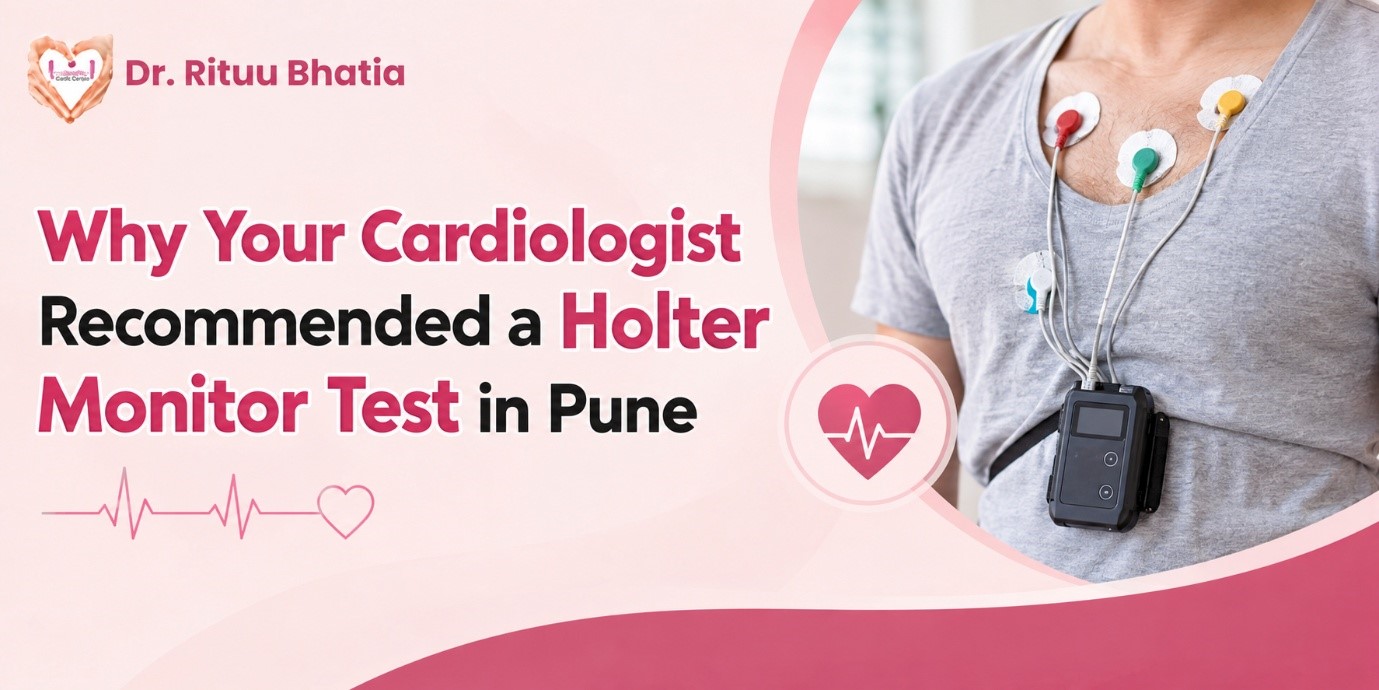
Why Your Cardiologist Recommended a Holter Monitor Test in Pune
Have you ever experienced a sudden racing heartbeat, dizziness, or an unusual fluttering sensation in your chest? These symptoms may occur occasionally and disappear before you visit your doctor. A routine ECG may not always capture such changes because it records your heart's electrical activity for only a short period. In these situations, a Holter Monitor Test in Pune may help your cardiologist understand what is happening with your heart throughout your daily activities.
At Narindra Heart Clinic, we understand that unexplained heart symptoms can be concerning. Holter monitoring allows doctors to observe heart rhythms over a longer period and helps them make more informed decisions about further evaluation and care.
What Is a Holter Monitor Test?
A Holter monitor is a small, portable device that continuously records the electrical activity of your heart, usually for 24 to 48 hours. It uses small electrodes attached to your chest and records your heart rhythm while you go about your normal routine.
Unlike a standard ECG, which captures heart activity for a few seconds, a Holter monitor provides a longer recording. This makes it useful for identifying irregular heart rhythms that may occur only occasionally.
Why Might Your Cardiologist Recommend It?
1. To Investigate Irregular Heartbeats
If you experience palpitations, a racing heartbeat, or a sensation of skipped beats, your cardiologist may recommend monitoring to identify possible rhythm abnormalities.
2. To Understand Unexplained Dizziness
Dizziness or fainting can sometimes be associated with changes in heart rhythm. A Holter monitor can help determine whether an irregular heartbeat occurs around the time of these symptoms.
3. To Detect Intermittent Heart Rhythm Problems
Some abnormal heart rhythms do not happen continuously. A longer recording period increases the opportunity to detect rhythm changes that may not appear during a routine ECG.
4. To Evaluate Heart Treatment
Your doctor may recommend Holter monitoring to assess your heart rhythm after starting certain medications or following treatment for a rhythm-related condition. The results can help guide further clinical decisions.
How Does the Test Work?
- Before the Test:A healthcare professional attaches small electrodes to your chest and connects them to a portable recording device. You may receive instructions about wearing the monitor and keeping a record of your activities and symptoms.
- During Monitoring: You can usually continue most of your regular activities while wearing the device. However, you should follow the instructions regarding bathing, exercise, and activities that could interfere with the recording.
If you experience palpitations, dizziness, or other symptoms, record the time and describe what you felt. This information can help your cardiologist compare your symptoms with the recorded heart rhythm. - After the Test: Once the monitoring period is complete, the device is returned for analysis. Your cardiologist reviews the recording and discusses the findings, including whether any further tests or treatment are required.
Is a Holter Monitor Test Safe?
Holter monitoring is a non-invasive and generally safe procedure. It does not involve needles, surgery, or exposure to radiation. Some people may experience mild skin irritation where the electrodes are attached.
The test records your heart rhythm during the monitoring period, but it does not detect every type of heart problem. Your doctor may recommend additional investigations depending on your symptoms and results.
Why Choose Narindra Heart Clinic?
At Narindra Heart Clinic, we focus on understanding each patient's symptoms and providing appropriate cardiac evaluation. We believe that clear communication and individualized medical guidance are important parts of heart care.
If your doctor recommends a Holter Monitor Test in Pune, discussing your symptoms, medical history, and test results with an experienced cardiac specialist can help you understand the next steps. Consulting the best cardiologist in pune can also help you make informed decisions about your heart health.
Conclusion
A Holter monitor test can provide valuable information when heart symptoms occur intermittently or a routine ECG does not provide enough detail. It helps your cardiologist observe your heart rhythm during everyday activities and determine whether further evaluation is needed.
If you experience recurring palpitations, unexplained dizziness, or an unusual heartbeat, consult a cardiologist rather than ignoring the symptoms. Timely medical evaluation can help identify possible problems and guide appropriate care.
Frequently Asked Questions (FAQs)
A standard Holter monitor is commonly worn for 24 to 48 hours. The duration depends on your symptoms and your doctor's recommendation.
Yes. You can generally sleep while wearing the device. Follow the instructions provided to ensure the electrodes and monitor remain properly positioned.
No. The test is painless because it records heart activity through electrodes attached to your skin. Mild irritation may occur at the electrode sites.
A Holter monitor is primarily used to record heart rhythms. It is not a substitute for emergency tests used to diagnose a heart attack. Seek immediate medical attention for chest pain or other symptoms suggestive of a heart attack.
Consult a cardiologist if you experience recurring palpitations, unexplained dizziness, fainting, or an unusually fast or slow heartbeat. Seek emergency care for severe chest pain, fainting with ongoing symptoms, or significant breathing difficulty.